

We’re a vanlife company that enjoys and uses our camper vans. We do more than just sell products in our store. Our team has experience building and traveling in the big three camper van chassis – RAM ProMaster, Mercedes Sprinter, and Ford Transit – as well as Volkswagons, box trucks, and more.
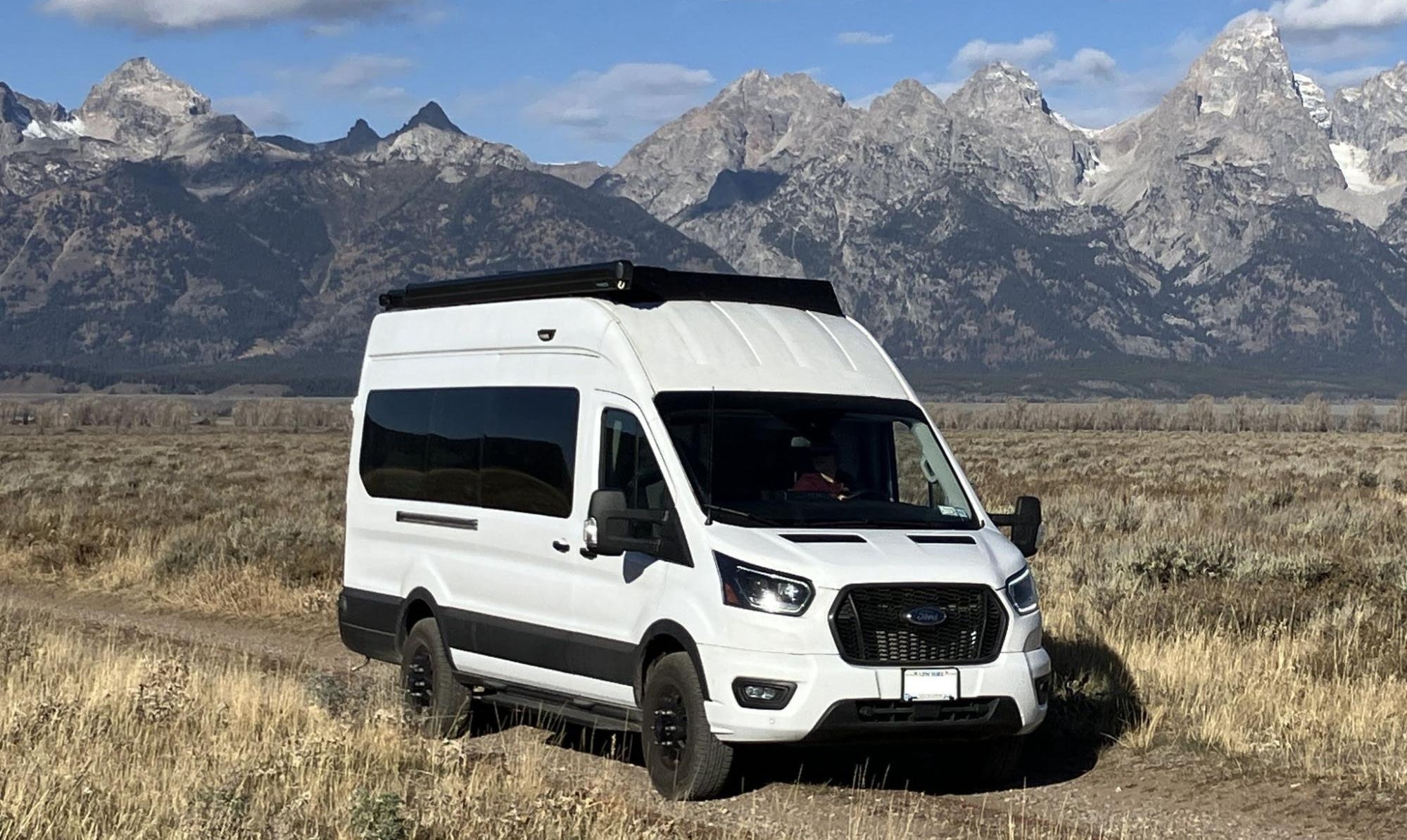
Zach wrote all about his preference for ProMaster. Mike talked about how he fell for “the look” of a “big…tough” Sprinter. This blog covers why I picked a Ford Transit for my DIY camper van conversion.
This post is not a sales pitch for the Ford Transit. If you’re trying to decide between a ProMaster, Sprinter or Transit, my short answer is that the Transit gave me the best mix of AWD availability, useful factory options, lower expected cost of ownership, and easy service access across North America. That combination made it the best van for my camper conversion.
Since you’re reading this blog, you’ve probably already read this suggestion in posts from Clayton or Mike or everyone else at Vanlife Outfitters – we strongly recommend renting or borrowing a camper van to try before you buy. I followed our own advice and rented a Hymer Sunlight and a Winnebago Revel well before I settled on a floorplan or specific equipment. The Sunlight was based on the Ram ProMaster chassis, and the Revel is built from a Sprinter chassis. Renting these vans provided tons of experience to base my own design decisions: van driving comfort, features/options, floorplan tradeoffs, installed devices, and more. So I rented a ProMaster and Sprinter, then I picked a Transit. Pray tell!
The interwebs are full of opinions (and maybe a few facts too) comparing ProMasters, Sprinters, and Transits as a base for DIY camper van conversions. Each of the big three chassis offers tall and long models to support a glamping rig or smaller models to suit your needs. The vanlife industry has come a long way in a few years, so now all of the major models have customized options from roof racks to interior trim kits to water tanks and more. There are a few reasons why I chose a Transit.
Why I Chose a Ford Transit Over a Sprinter or ProMaster
AWD
I wanted four or all wheel drive for peace of mind in snowy conditions and forest roads with variable conditions. Ford offers an AWD option in the Transit, but 4X4 is a (fairly expensive) aftermarket conversion.
AWD eliminated the ProMaster from my list since it’s only front wheel drive. That alone did not make the decision for me, but it was a big factor.
OEM Options
All of the manufacturers offer numerous build options that help jumpstart the conversion from empty van to camper van. I found that many Ford dealerships had conversion-ready vans on their lots with options like swivel seats, extended gas tank, and even the hotly debated dual alternator package. You can always special order your van to tick every option box on your list. I tried, twice!, and never took delivery, but that’s a story for a different post.
Cost and Service
Having owned and maintained a European import car, I decided that the higher entry cost plus maintenance costs of a Mercedes was not for me. Since I’ve put hundreds of thousands of miles on my past travel vehicles, knowing that nearby service centers can fix Ford vehicles almost anywhere in North America was a factor for me.
A desire for lower cost of ownership and ease of service pushed Mercedes down on my list. A Transit was an easy choice, and I certainly have no regrets.
Ford Transit 101 for Camper Van Conversions
Transit models and options vary by year, so this post won’t try and duplicate Ford’s website. Just know that we’re talking about the commercial Ford Transit van and not the Transit Connect, which is smaller. A majority of camper vans start with a Cargo Van model, although some customers needing more than two seats may opt with a Crew Van or Passenger Van model.
Transit vans are available in many sizes including 130” and 148” wheelbases, three body heights from low to high, three body lengths from regular to extended, and four vehicle weight ratings. The largest Transit is a high roof, extended length van. Lower roof heights or shorter bodies trade off interior space for other benefits such as fitting in garages, easier parking and maneuvering, better fuel economy (due to weight), and of course cost. Ford offers two engine types (PDFi and EcoBoost), but there is not a diesel option for the Transit. The drive train options are AWD or rear wheel drive.
Ford offers many build options that are helpful for camper van conversion. Note that some options are only available in specific models or years. Here is a quick take on some of the most popular options.
- 253-degree Rear Door Opening – useful if you need easy access to the garage to load and unload gear.
- 4-way manual swivel Driver and 4-way manual swivel Passenger seats – provides factory swivel seats.
- Auxiliary Fuel Port Extension Line – allows easy connection of an air heater to the fuel tank without the dreaded task of “dropping the fuel tank” during the install.
- Auxiliary Heater / AC Prep Package – comes with “stub lines” for the radiator coolant to allow easier connection to an IsoTemp water heater.
- Cargo Tie-Down Hooks – a low-cost option that provides threaded holes throughout the cargo area that are extremely useful for connecting your electrical system chassis ground.
- Digital Rearview Mirror – lets the driver see behind the vehicle virtually while driving.
- Extended Range Fuel Tank – increases the size of the fuel tank from 25 gallons to 31 gallons.
- Dual AGM Batteries – provides protection from running down your starter battery and is one of the factory options many van builders look for to help connect their electrical setups.
- Dual Alternator – can be valuable for higher-power charging setups.
Check out this post for way more detail on Dual AGM Batteries, Dual Alternator and Ford Customer Connection Points for your Transit electrical systems.
- Front Overhead Shelf – provides a tiny bit of extra storage space and useful mounting points.
- Large Center Console – provides more drink holders and nooks and crannies between the driver and passenger areas.
- Power Sliding Door or Close Assist Feature – helps close the sliding door and minimizes that clanking door sound from slamming the heavy door closed.
For DIY builds, you should understand the Body & Equipment Mounting Manual. The BEMM “provides general descriptions and advice for modifying vehicles” in Ford-speak. The BEMM details many important items that you need to know in a van conversion:
- Where and where not to drill and cut during the build
- How to interface to the Ford battery system
- Where to access chassis grounds
- How to access the roof rack mounting points
- Locations of airbags, safety equipment, and driving aid sensors
- Body mounting points
My Experience with a Transit Camper Van Build
I love my high roof, extended length Transit. The high roof Transit provides the most internal headroom of the big three (except for the Super High Roof ProMaster that has other limitations), which is high enough to comfortably stand in the aisle and support a bed lift that converts the garage into a dinette and workspace for rainy days. The length provides more than enough room for a queen-length bed, a sink and cookspace, a shoilet, and of course storage.
The roof is large enough for an air conditioner, a rooftop fan, solar, and antennas for TV and internet. More broadly, the Transit worked well for the kind of camper van conversion I wanted – something capable enough for travel and boondocking, but still comfortable and practical to live with.
Transits are not true off road vehicles, but they are perfectly capable in appropriate conditions. Transits can be modified with an aftermarket body lift, which then allows larger tires for more ground clearance and comfort on unmaintained roads. I’m still not doing the Rubicon in my Transit though. The extended length Transit in particular has a terrible departure angle, so you just need to be mindful of where you’re taking your rig. The van drives great with easy handling in all but extreme crosswinds (I’m talking to you, front range winds!).
For a little perspective, here are some post-build numbers from my Transit build.
- Height is just under 10’ due to body lift and larger tires with rooftop A/C and vent fan.
- Fully loaded weight is approximately 9300 lbs with a 30 gallon fresh water tank.
- Ground clearance is roughly 8” to the differential.
Ford Transit Camper Van Pros and Cons
Does the Ford Transit have some disadvantages? Sure. The van is widest at mid-height. The Transit body is curved in all three directions, making cabinet building and installation…more fun? Transits are known to be fairly narrow in the cabin, so traversing between the driver and passenger seats or even trying to swivel the seats with the doors closed is a bit of a challenge.
I’ve also had a fair share of recalls, and the workmanship is okay but doesn’t scream luxury brand. As an example, the threaded holes on the roof to accept mounting adapters are sometimes misaligned with the covers to access said holes. I consider myself lucky that my holes were accessible and didn’t require some grinding to complete my roof rack install.
That said, no van is perfect, and I can live with these tradeoffs.
On the plus side, the Transit checked the boxes that mattered most to me: AWD availability, useful factory options, strong service access, good headroom, and enough space to build the layout I wanted. If those same things matter most to you, a Ford Transit is a strong camper van platform to consider.

Final Thoughts
If you’re trying to choose the best van for a camper conversion, there is no perfect answer. ProMasters, Sprinters and Transits all have strengths and weaknesses. For me, AWD, lower expected cost of ownership, easier service access, and the right mix of factory options made the Transit the clear winner.
I rented a ProMaster and Sprinter, then I picked a Transit. I certainly have no regrets.
If you’re still comparing vans, I’d strongly recommend doing what I did – rent or borrow before you buy. A few days of real-world use will teach you more than hours of reading opinions on the internet.
Frequently Asked Questions – Ford Transit Camper Van Conversion
Is a Ford Transit good for a camper van conversion?
Yes. A Ford Transit is a strong camper van platform because it offers multiple sizes, useful factory options, available AWD, and broad service access across North America. It is not perfect, but it gives many DIY builders a very practical mix of capability, comfort, and ownership simplicity.
Why choose a Ford Transit over a ProMaster or Sprinter?
For me, the Transit gave the best overall mix of AWD availability, factory options, lower expected cost of ownership than a Sprinter, and easier service access. A ProMaster or Sprinter may be a better fit for some builders, but those were the factors that pushed the Transit to the top of my list.
Is Ford Transit AWD good enough for vanlife?
For most vanlife use, yes. The Transit is not a true off-road vehicle, but AWD is very helpful for snowy roads, wet conditions, and forest roads with variable conditions. I wanted it for peace of mind, not because I was trying to turn the van into a hardcore trail rig.
What Ford Transit options are best for a camper conversion?
That depends on your build, but some of the most useful factory options can include swivel seats, an extended range fuel tank, 253-degree rear door opening, auxiliary fuel port extension line, overhead shelf, and certain electrical-related options. It is worth thinking through your build goals before buying the van, because the right factory options can make the conversion much easier.
What are the downsides of a Ford Transit camper conversion?
The Transit does have tradeoffs. The body is curved in all three directions, which can make cabinet work and installation more complicated. The cabin is also fairly narrow, especially when moving between the front seats. I have also had my fair share of recalls, and the workmanship does not exactly scream luxury brand. None of that makes it a bad choice, but those are real tradeoffs to consider.
Should I rent a ProMaster, Sprinter or Transit before buying?
Absolutely. Renting or borrowing a van before buying is one of the best ways to make a smarter platform decision. A few days of real-world driving and living in a van will teach you a lot about comfort, layout, visibility, storage, and what features actually matter to you. That experience was a big help in my own decision.
Additional Resources
Ford Transit page. Use Build & Price to see all of the Ford options.
Ford Transit Body & Equipment Mounting Manual Search by Model and “mounting manual” to find your model year BEMM.
Ford Transit USA Forum is an active community of Transit owners and DIY camper van conversion enthusiasts.


