



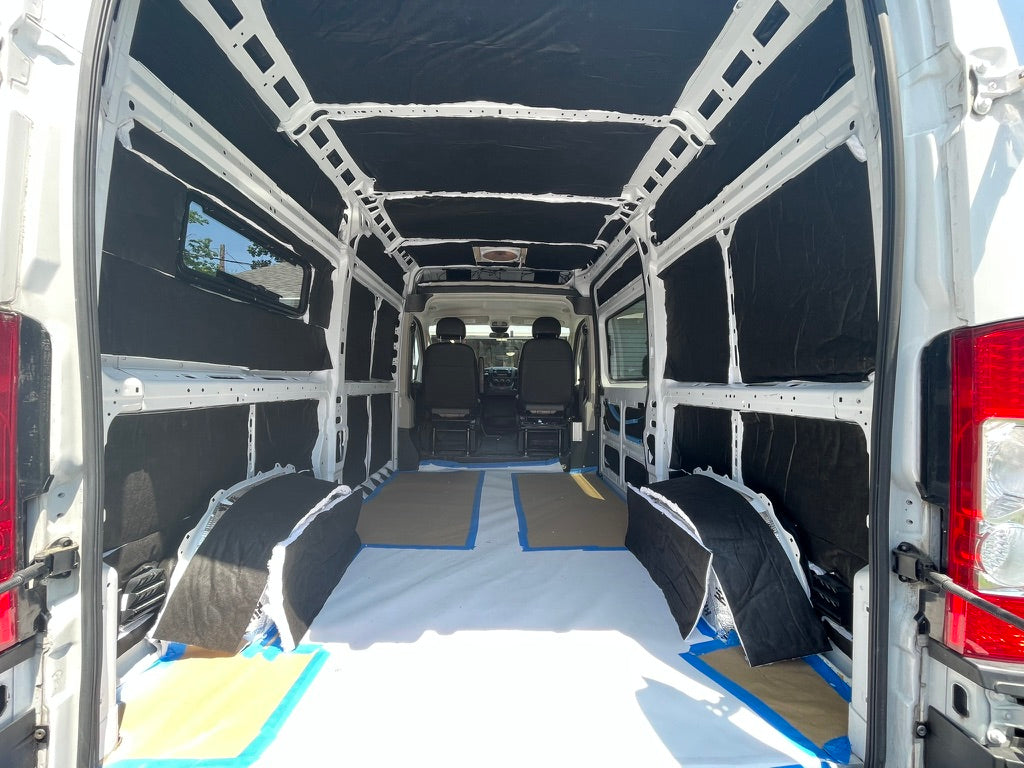


Don’t Do It Alone. Build Your Van With Expert Help.
Transform your van into the perfect adventure home with the help of our experienced builders and curated resources. From planning to the final build, we’re here to make your van conversion journey smooth, affordable, and inspiring.

Build Your Own Electrical System

Designing a van electrical system can feel overwhelming - but it doesn’t have to. Our interactive electrical system bundle builder guides each decision, step by step, helping you choose the right components, and build a system that fits your power needs, budget, and confidence level.
Created by van-lifers. Backed by real-world experience.
How much does a complete camper van electrical system cost?
How much does a complete camper van electrical system cost?
Budget $2,000–$4,000 for a simple system. Advanced off-grid builds with a large inverter/charger, a sizeable lithium battery bank, and a secondary alternator can run $10,000–$15,000+. Your exact cost depends on how much battery power you need, whether you want solar, require a secondary alternator, and many other factors. The best place to start is to think about how you will use your van, perform a load calculation, and go from there.
Is a 24V or 48V system more powerful than a 12V system?
Is a 24V or 48V system more powerful than a 12V system?
We recommend 12V systems for most simple camper van electrical systems. If you're interested in smaller cables and higher efficiency for extended off-grid camping with high power devices, consider 24V or 48V systems. The secondary alternator kits available for our 24V and 48V systems do have a higher power output than 12V kits, so in that way, they provide more charging capability. But, technically the battery voltage does not make your system "more powerful" - a 10Kwh battery bank has the same capability to run your appliances whether you're at 12V, 24V, or 48V!
Which size inverter/charger is right for me?
Which size inverter/charger is right for me?
By far, the most popular choice of inverter/charger in a camper van is a Victron Multiplus "3000". These units can power a coffee maker, toaster oven, water heater, and of course your phones & laptop chargers, and the "3000" units can provide enough surge power to run multiple devices at once. Simple electrical systems with only few AC loads may consider a Multiplus "2000". Large rigs desiring 50 Amp split phase power may require a Multiplus 2 x 120 VAC unit, and other large rigs with lots of AC loads should consider a Multiplus "5000".
What fuses and wire sizes do I need for my camper van electrical system?
What fuses and wire sizes do I need for my camper van electrical system?
Your fuse should always be sized to protect the wire, and your wire should be sized to safely carry the load of the devices on that circuit. Fuse sizes are also commonly recommended in each device's manual. We provide a suite of example wiring diagrams that show fuse and wire selection for many of the popular items in our electrical bundles.
Most Popular Products
Customer-Favorite Gear, Proven on the Road!
These are the products our customers keep coming back for - trusted by thousands of DIY builders and full-time vanlifers alike. Each one has earned its reputation through real builds, real miles, and real-world reliability.


3M Thinsulate (SM600L) Acoustic & Thermal Insulation (Walls & Ceiling)


Victron Electrical System - Build Your Own Bundle


Flat-Jack 2.0 – Inflatable Air Tire Leveler


Low-E Reflective Insulation Radiant Barrier


Lagun Table Mount System


Scopema Swivel Base - Ford Transit


Promaster Undermount Grey Water Tank
Customer Reviews
Google rating score: 5.0 Stars, based on 170+ reviews

Greg McCanless
I’m happy to give a shout out to VanLife Outfitters. These folks are an incredible example of how a company should conduct business. Although I’m building a truck camper, I have bought several things from VanLife outfitters and their customer service is bar none . I would never hesitate recommending VanLife outfitters to anyone whether they are building a van camper or boat. And I might add even a tiny home. Everyone that I’ve talked to have been nothing but incredible. In particular, Jason in technical support was an incredible blessing to me. I had a problem with the Aqua Hot Gen 1 heater I bought from them. It was not the heater fault, but something I did. Jason helped bird-dog the solution and together we got it fixed. He stuck with me, did research, and called me back several times to make sure that the problem was resolved. These people know the business, many have their on rigs, which gives them the best experience. Thanks you Vanlife Outfitters!!!!

Ian Snow
This company is amazing! Quick shipping, best price possible. Customer for LIFE! Thanks Vanlife!

Becky Hartgraves
My husband and I are doing our first vanbuild. As rookies, we have found Vanlife Outfitters to be a trusted resource for ease of product shopping and purchasing, video demonstrations, guidance and excellent customer service. They were particularly a great one-stop shop when building our electrical system.

jj hua
I ordered most of the parts for my sprinter conversion from them. They have absolutely the best customer service. I had issues with my fridge installation duing the weekend and eamiled their customer service for help. Both times, they emailed me back with the instructions/help I need on Sunday. Thank you and this is absolutely my go to place.

eric zagala
Spent lotsa money here, will probably spend more. High quality products, fast shipping and tremendous support. Excellent free resources, e.g. wiring diagrams, on the website. Highly recommend.
Expert Guidance To Help You Get on Your Way
We’ve spent years documenting our own van builds so you don’t have to start from scratch. These guides turn lessons from the road into clear, step-by-step resources that help you plan, install, and build with confidence. We are always adding new articles and insights as we test more gear, tackle new projects, and learn from the vanlife community - so there’s always something fresh to explore.
Built by vanlifers. Written for DIY builders. Explore the guides below →


Hear From Our Experts
Stories From the Road. Insights From Experience.
Our podcasts dive into what vanlife is really like - from first builds to full-time living. Each episode features real builders and experts sharing hard-earned lessons, practical advice, and inspiration for your own journey on the road.
Learn from the road. Build with confidence. Listen now →

Vanlife Roadmap Podcast: Ep. 1
From Basement Builds to Vanlife Outfitters Zach Daudert on Curiosity, Camper Vans, and Building a Community the Hard Way Vanlife rarely starts with a parts list. For Zach Daudert, it started decades earlier – with cardboard hospitals taped together in a basement, a teenage obsession with fixing and building things, and a lifelong pull toward mobility, simplicity, and making systems work better. In the inaugural episode of the Vanlife Roadmap podcast, Zach shares the winding story that led from a childhood in Colorado to building camper vans long before “vanlife” had a name – and ultimately to founding multiple companies designed to make vanlife less overwhelming and more intentional. This is not a story about chasing trends. It’s a story about learning through doing, solving real problems, and building something because it needed to exist. A Builder Before He Had the Language for It Zach grew up in Greeley, Colorado, spending much of his childhood building things and imagining adult worlds long before most kids his age. As a child, he recreated a fully mapped hospital in his parents’ basement using cardboard, masking tape, and detailed systems. There were intake forms. Recovery rooms. Even interviews with real medical professionals, recorded on cassette tapes. Looking back, the pattern is obvious. Zach wasn’t just interested in things – he was interested in how systems worked. That instinct never left. Living in a Van at 17 – Long Before It Was “Vanlife” Zach built and lived in his first camper van at just 17 years old – a 1971 Volkswagen Westfalia he rebuilt with his dad and girlfriend. It wasn’t part of a movement, and it certainly wasn’t a lifestyle trend. It was simply a way to travel, see the country, and follow the Grateful Dead. The van was basic. There was no polished interior, no optimized layout, and no online guides to follow. But it worked. It gave him freedom, mobility, and just enough shelter to stay on the road. More importantly, it taught him how much you could do with very little – and how quickly you learned what actually mattered once you started living in the space. Looking back, that first van wasn’t about building the “right” setup. It was about movement, music, and figuring things out along the way – lessons that would quietly shape how Zach approached every van he built after that. Learning by Doing (and Breaking Things) As Zach lived and traveled in vans through his early adulthood, he slowly upgraded systems: • Better electrical setups • Refrigeration instead of ice • Plumbing scavenged from RV salvage yards • Marine components repurposed for mobile living Without internet resources, he learned by dismantling old RVs and studying how they worked – physically tracing systems to understand them. This hands-on, problem-driven learning shaped a core belief that still defines Vanlife Outfitters today: The best van builds are driven by use, not just gear. Panama, Burnout, and Starting Over After years in video production and early web development while also founding a community training and resource organization for creative professionals (Boulder Digital Arts), Zach burned out. He moved to Panama, and with the help of a 5-person Panamanian crew and ex-wife, built a home from the ground up inside the crater of an extinct volcano (El Valle de Antón), and spent years living there on and off – growing food, gardening, and stepping away from constant digital work. But vans remained part of his life. When he returned to the U.S. and decided to build a modern camper van from a blank cargo van for the first time, everything changed. This was 2016. There were still no clear resources. No centralized places to buy trusted parts. No clear guidance on systems design. Even basic terminology was hard to find. So Zach did what he’d always done. He figured it out – and he documented it. Why the Blog Came First Zach started a blog to share what he was learning – not because he planned to build a business, but because he knew others would run into the same problems he did. He wrote about: Electrical systems Plumbing layouts Choosing a van platform Repurposing marine and RV components The response surprised him. People weren’t just reading – they were asking questions. A lot of them. That revealed a deeper problem. The Real Pain Point Wasn’t Installation – It Was Sourcing Zach realized that one of the hardest parts of building a camper van wasn’t the physical labor – it was figuring out what to buy. Parts were scattered across vendors who didn’t understand vanlife use cases. Shipping was unreliable. Support was poor. Builders were overwhelmed by choice and conflicting advice. That insight became the foundation of Vanlife Outfitters. Not as a trend play. Not as a merch brand. [Well… he was hoping to become a t-shirt mogul.] But as a curated store built by people who actually used the gear. From Blog to Business – With the Right Partner Josh Theberge was one of the early readers of Zach’s blog. He was building vans professionally during the pandemic and running into the same frustrations – just at a larger scale. Together, they launched the Vanlife Outfitters store in 2020 with a simple promise: • Road-tested products • Honest guidance • Real technical support • A store that saves builders time, not just money Vanlife Outfitters wasn’t built to sell everything. It was built to sell the right things. Community Over Commerce As Vanlife Outfitters grew, Zach and Josh kept coming back to the same realization: the vanlife community needed more than products and online advice. It needed a place to gather that actually felt like vanlife. That idea became Peace Love & Vans. Zach explains that while vanlife events existed in other parts of the country, there was very little for the growing community on the East Coast. Rather than creating another expo or trade show, the goal was to build something different – an event centered on people, not booths. From the start, Peace Love & Vans was designed as a camping-first experience. Vans camp together in a natural setting, not a parking lot. Conversations happen more in van “neighborhoods” than at sales tables. Music, food, and shared experiences are part of the fabric of the event, creating an environment that reflects why many people are drawn to vanlife in the first place. Zach talks about how community is often what keeps people in vanlife long-term. Peace Love & Vans was built to support that – bringing together builders, DIYers, longtime vanlifers, and people just starting out, all on equal footing. The result is an event that feels less like an industry showcase and more like a gathering of people who share a common way of living. It’s a reflection of the same philosophy behind Vanlife Outfitters – build things with intention, prioritize real-world use, and put community before commerce. Lessons for Anyone Building a Van Today Zach’s advice to first-time builders is refreshingly simple: Don’t overthink it Don’t chase perfection Get started and use the van Technology will change. Products will improve. Your second build will always be better than your first. What matters most is designing for how you’ll actually live, then making sure your systems support that reality. Electrical systems, in particular, deserve more thought than aesthetics — because they quietly determine comfort, capability, and confidence on the road. Why This Story Matters Zach’s path explains why Vanlife Outfitters exists — and why it operates differently. It wasn’t built by marketers. It wasn’t built by trend followers. It was built by people who spent decades facing the same questions that today’s builders are asking. And then answering them. Want to Hear the Full Conversation? Listen to Episode 1 of Vanlife Roadmap to hear Zach’s story in his own words — including the mistakes, the laughter, and the lessons learned along the way. Follow along on YouTube or wherever you listen to podcasts. If you’re planning a camper van build, exploring vanlife, or want to become a t-shirt mogul, it’s a great place to start. And if you’ve got questions about your own build, reach out. We’re always happy to help. Want to explore more? Visit the Vanlife Outfitters Store to browse gear, learn from real-world builds, and get help choosing the right setup for your own vanlife adventure.

Vanlife Roadmap Podcast: Ep. 2
From Miami Status to Boondock 3.0 Josh on Vanlife Tradeoffs, Building for Real Use, and Redefining Success Josh joined this episode from inside his van, parked “down by the ocean,” in a build he calls “The Boondock 3.0.” It’s the third iteration of his first van concept, refined over years of real use and a lot of learning the hard way. Josh is also one of the founders of Vanlife Outfitters, and his story is a good reminder that vanlife rarely starts with a perfect plan. It usually starts with a pull toward a different kind of life, then a series of decisions and tradeoffs that get clearer once you’re actually living them. From “Miami starter kit” to a different definition of success Josh was born in Boston, moved to Orlando for college, and later took an unexpected turn into construction and real estate. After the 2008 crash, he and a group of friends started buying and fixing properties in South Florida, eventually buying around 130 properties and managing a large portfolio through a property management company. When that chapter ended around 2015, Josh describes a period where he went “a little overboard” with the lifestyle side of “success” – waterfront condo, sports car, watches, expensive dinners, the whole “Miami guy starter kit” as he called it. What changed wasn’t a single dramatic moment. It was noticing how empty the conversations felt, then realizing how alive he felt outdoors. A pivotal trip was ten days in North Carolina learning to whitewater kayak, spending long cold days in the water and sleeping in a barebones shack. It should have felt like deprivation compared to his Miami condo, but it didn’t. He came home thinking, “This is the type of stuff I want to be doing all the time.” That trip kicked off a process of simplification. He looked at cabins, then tiny homes, then something smaller and more mobile – eventually finding vanlife (back when resources were scarce). He then sold “everything” to fully reset his life. Building the first van when almost nobody was doing it Josh didn’t know anyone with a van when he started. He also didn’t pretend a house background meant he knew how to build a van. He calls out a key difference that matters for DIY builders – houses are built in “inches,” while vans are “multiple millimeters,” and a lot of van systems feel closer to marine work than residential construction. One key way he learned was through an early vanlife blog he found – Vanlife Outfitters – and through the person behind it, Zach. Josh says Zach became a mentor during the build, feeding him product and system guidance while they stayed in touch remotely. When Josh looks back on that first build, the thing he’s most proud of is simply finishing it – a huge accomplishment. The hardest part for most DIY builders When Josh talks about the difficulties of first builds, he doesn’t hesitate to say that the hardest and most error-prone area is the electrical system. On his first build, he found a marine electrician in South Florida and essentially assisted for three days while they installed and programmed the system. Josh had previously done some wiring work himself, but he wanted experienced help for the final integration and setup. He adds a practical approach for people who don’t yet know what their lifestyle will demand. Do a load calculation. Start with a baseline system. Leave room and budget to expand, like adding batteries later or adding a second alternator if needed. His point is simple. Many first-time builders guess wrong because living in a van changes how you use power, and you learn your true patterns after you’re on the road. Two space decisions Josh considers game-changing 1) Shower strategy that matches real use Showers are one of the most debated van decisions, and Josh’s view comes from living it for years. In his first two vans, he used an outdoor shower and gym showers, but he says there was still “25% of the time” when it became annoying or impractical – no nearby gym, too cold outside, or too hard to find privacy in a city. At the same time, he didn’t want a fixed indoor shower taking up space and breaking the “open” feeling of the van. His current solution is a setup that gives indoor shower capability without committing permanent space the way a traditional fixed shower would (Link: Josh’s shower setup). He also mentions a creative use of dead space behind the shower – using an electric pop-up mechanism to raise and lower an appliance cabinet, keeping appliances off the countertop. 2) The bulkhead between cockpit and cabin If there’s one design element Josh would “never skip” now, it’s a dedicated bulkhead wall separating the cockpit from the cabin, with a pass-through door. He knows it’s controversial because many people want swivel seats and an open front-to-back space. But his argument is that a wall is fundamentally different from a curtain for sound, light, and temperature control. He believes most heat and cold intrusion comes through the windshield and front windows, and the bulkhead eliminates “probably 90%” of that. He also frames it as a lifestyle upgrade. The bulkhead can create two distinct living zones, which matters if you’re working remotely or sharing the space with a partner. How Josh uses vanlife now Josh stopped full-time van life in 2020 and now uses his van part-time, often as a base camp for backpacking trips with his girlfriend. He’ll park at a trailhead, backpack for several days, then return to the van and move to the next spot. A major enabler is reliable internet. Josh is using Starlink during the interview and calls it one of the biggest game changers in vanlife in recent years because it can support remote work even where there’s no cell signal. He typically travels in month-long blocks, leaving the van at friends’ houses or storage lots, then returning to his home base in Miami before heading out again. How Vanlife Outfitters became a store Josh’s relationship with Zach started long before the company did. Josh found Zach’s early blog while researching his first build, and they stayed in touch for years. During the pandemic, Josh was involved in a van-building operation with a friend who ran a production company. When festivals and events were canceled, they pivoted to building vans to keep a team of tradespeople employed. Over about 18 months, they built around 11 or 12 vans, with Josh supervising and training the tradesmen. That’s also when Zach asked a practical question. Zach was receiving a lot of emails asking what products to use, and he saw that Josh had business experience, a warehouse environment, and a team. Zach asked if Josh would want to turn the blog into a store. Josh agreed, and they built it together with a clear split. Zach built the store online while he was in Panama (see his episode for that story). Josh handled in-person operations around inventory and fulfillment, initially using a corner of the van-building warehouse. In a detail that still surprises people, they didn’t meet in person for a few years, not until the business had outgrown the corner setup and moved into a second warehouse. When asked what he’s most proud of, Josh points to the team, the number of vanlifers they’ve helped, and the company’s reputation for customer service and technical support. Peace Love & Vans and why community matters Josh and Zach also co-founded a vanlife festival – Peace Love & Vans – in part because many events were being canceled during the pandemic and Florida was one of the few places where large events were still possible. They wanted something more community-driven than a typical trade show. Josh contrasts expo-heavy events with what they aimed to build – a “utopian van village” where vanlifers and “van-curious” can immerse themselves in the community, see floor plans, meet builders, discover products, and simply hang out with others living a similar lifestyle. He also doubles down on a practical recommendation: If you’re van-curious, then you should rent a van and take it to a festival. It compresses learning into a weekend because you can talk to hundreds of vanlifers, see many layouts, and get real feedback on decisions before committing to a build. Vanlife has changed and Josh’s three “new wave” groups Josh started vanlife when it felt like a fringe idea. He says the pandemic pushed it into the mainstream, and he sees growth coming from three distinct groups today. People in their 20s who want an alternative to high rent and a traditional path. People in their 30s and 40s whose work is now truly remote, especially enabled by reliable internet like Starlink. People 50+ who want freedom and flexibility without the constraints of RV reservations and campground planning, opting into off-grid vans as a different kind of travel. The thread that ties it together is “freedom and flexibility.” Quick takeaways for DIY builders from Josh If you only remember a few things from this conversation, these are the ones Josh kept returning to. Electrical first, and plan for change DIY builders get the electrical system wrong most often, and it can be the most expensive mistake. Start with a load calculation, build for today, and leave room to expand once you learn how you actually travel. Use the resources and ask for help Josh didn’t have a roadmap when he started, but now builders do. His advice is to use the content that’s already available, and learn directly from people who have built and lived in their vans. Design for the “dirty stuff” you take for granted in a house A surprising mistake he sees is skipping the unglamorous storage needs. Trash, laundry, shoes, backpacks. Without dedicated places, mess and friction take over the space fast. Summary thoughts from Josh on building for real use If there’s a theme that runs through Josh’s story, it’s that the best van decisions don’t come from chasing an ideal build. They come from paying attention to real use, then having the humility to adjust. That’s what “Boondock 3.0” represents – a build shaped by miles, weather, work, and the everyday friction points you only notice once the van is your home base. If you’re early in your own process, the goal isn’t to get every detail right on day one. It’s to build a solid foundation, leave room to evolve, and learn from people who have already lived the tradeoffs. If you want to hear the full conversation with Josh, check out Episode 02 of Vanlife Roadmap – and if you’re stuck on a decision, reach out to our team at support@vanlifeoutfitters.com.

Vanlife Roadmap Podcast: Ep. 3
Why Justin Shipp Left the RV Industry to Build Better Vans Before Site Seven was a van build shop, it was a set of convictions Justin Shipp had been forming for years. In this episode of Vanlife Roadmap, Justin shares how family roots in the RV business, a detour into custom bicycle building, and growing frustration with quantity-over-quality products eventually shaped the way he thinks about vans. What follows is not just the story of how Site Seven started. It is a look at the standards behind it – what Justin believes is worth building, what matters in real use, and why quality, simplicity, and thoughtful design still matter. From family RV roots to a different path Justin’s story starts long before camper vans. He describes growing up in a family RV dealership that began when his grandfather pivoted out of the dry cleaning business and discovered there was a far better margin in selling pop-up campers than pressing pants. Over time, that small operation became a large Tennessee dealership with a strong reputation and a family-owned culture built around treating people right and doing good work. Working across departments – from picking up trash and washing RVs to spending time in parts, finance, and the body shop – gave Justin a practical education in how businesses actually work. It also showed him how different parts of a company affect each other, and how decisions in one area can either support or damage another. He says that hands-on exposure left a bigger impression on him than school did. That experience still shows up in how Site Seven thinks about building today. Why the traditional RV model stopped making sense After the family business was sold to Camping World, Justin stayed through the transition and saw the shift from family ownership to a corporate model. Some changes, he says, were necessary. Others were harder to accept. What stood out most was the move toward profit over people – less focus on the customer, less focus on employees, and more pressure around the bottom line. That change did not resonate with him, and it became part of the reason he knew he would not stay there long term. At the same time, he was increasingly drawn to old Volkswagens. What appealed to him was not nostalgia for its own sake. It was simplicity. Those vehicles were thoughtfully made, mechanically understandable, and useful in a way many RVs did not feel. In the shop, he was seeing RVs that fell apart early. Outside of work, he was enjoying the freedom of a simple Volkswagen bus that could go places larger RVs never could. That contrast helped sharpen an important insight. Justin still believed in the idea behind RV travel. He just no longer believed the usual product was the best tool for it. Craftsmanship came before vans Before Site Seven, there were bicycles. After leaving the dealership, Justin began building custom steel-frame bicycles. Financially, he says, it was never really viable. But the work taught him something that stayed with him – if you want to avoid problems later, the best thing you can do is the best possible job now. That mindset shows up throughout the episode. He talks about buying the best tools he could afford, seeking out education in a niche craft, and wanting to be able to sleep at night knowing that something he made was safe and sound. In a one-person shop, there is no place to hide from subpar work. If something fails, the responsibility is obvious. That period may not have produced a lasting bicycle business, but it formed the standard he would later bring into van building. The first van was built in a driveway The transition into vans did not begin with a polished shop or a big launch plan. It began with a conversation. As the bicycle work was winding down, Justin reached out to someone in the restoration world, talked through what he was seeing in camper vans, and got encouragement to go for it. A few calls later, someone he had worked for in high school reached out and asked whether he could build a van. His answer was yes – even though he did not yet know exactly how. That first van was built in the customer’s driveway. He describes the process as a logistical nightmare – fabricating in one place, transporting parts elsewhere, working through design and materials on the fly – but it also became the proof of concept. The customer believed he could do it, then became a major advocate afterward, helping line up additional projects before the first van was even finished. Years later, that same first van is still around, having accumulated more than 60,000 miles, and was then back in the shop for electrical upgrades, additional furniture, and a water system. Building a shop by growing carefully The business did not jump from driveway builds to a polished facility overnight. Justin describes the next step as a small rented bay – just the amount of space he could afford. Then a second bay. Then the mezzanine. Eventually, after several years, Site Seven bought its current building in 2021 and built out a shop designed to support more work in-house. That in-house focus matters to the Site Seven story. Justin describes intentionally investing in equipment, experimenting, and putting together a team that could build as much as possible internally rather than depending on outside manufacturers. That includes furniture, fabrication, and even certain products and accessories they could theoretically buy off the shelf but prefer to develop themselves. The business has now completed more than 100 vans, reflecting a business that has grown steadily without losing its preference for careful, hands-on work. Quality versus quantity is still the dividing line One of the clearest themes in the episode is that the biggest difference between Site Seven’s work and the broader RV world is not aesthetics. It is mindset. Justin says RV manufacturing often emphasizes quantity over quality. The result may look impressive at first glance, but the materials and execution are not always built for long-term use. By contrast, Site Seven aims for a different standard – one grounded in better materials, more in-house control, and a deeper commitment to craft. He puts it in practical terms: There is a big difference between a vehicle built over months by a small team and one built in days by a much larger production line. His goal is that the difference is obvious as soon as someone opens the door. For anyone planning a build, that is an important distinction. The goal is not perfection in the abstract. The goal is dependable use. Quality, simplicity, and design When asked what defines a Site Seven van, Justin points to three ideas – quality, simplicity, and design. Quality is the most obvious. Use the nicest materials and components possible. Build as much in-house as possible. Expect everyone on the team to do their best work. Simplicity is just as important. In Justin’s view, systems do not need to be so complicated that they are hard to understand, hard to service, or more likely to fail. Simplicity reduces both user frustration and mechanical risk. That thinking clearly comes from his earlier time with old Volkswagens, where straightforward function and repairability were part of the appeal. Design, in this conversation, is not really about decoration. It is about making a van make sense. Justin talks about furniture that is durable but serviceable, electrical systems that are approachable for non-experts, and layouts that leave enough room for people to actually live in the van. In his words, many “off-the-shelf” vans have everything except room for you. Site Seven tries to include what is needed without filling the van so completely that there is no space left to move, stretch out, or simply be comfortable for a few days indoors. That is a useful reminder for DIY builders too. More features do not automatically make a van better. Sometimes they make it harder to use. Contact our support team if you have any questions about your own van build. Designing around actual use Another recurring theme is that Site Seven’s decisions are shaped by experience, not just ideas. Justin explains that their design approach is meant to create vans that feel good to live in, not just vans that look complete on paper. That includes leaving enough open space, keeping systems understandable, and thinking carefully about how each area of the van will function once someone is actually out on the road. There is also a strong theme of staying in the lane the shop knows well. Site Seven’s business has grown not by trying to be everything, but by refining a recognizable standard and getting better at executing it. That point of view fits the rest of Justin’s comments about quality, simplicity, and thoughtful design. That is a meaningful tradeoff. Saying no to work can be difficult. But in this case, it seems to have helped Site Seven deepen its identity rather than dilute it. Innovation inside a clear point of view Staying consistent has not meant standing still. Justin describes Site Seven as a shop with a clear aesthetic and a strong sense of what fits its work. Over time, that has meant learning to stay in its lane – not because every van should look the same, but because the team wants its builds to feel coherent, intentional, and recognizably Site Seven. Within that point of view, there is still plenty of room to experiment. Justin talks about custom upper cabinetry, a distinctive kitchenette layout, a bi-fold seating solution in a shorter 144 van, and in-house development of items like water tanks, shower pan ideas, roof racks, and running boards. What makes those examples interesting is that they are not framed as novelty for novelty’s sake. They come out of real design problems – how to use space better, how to improve function, and how to make the van feel both practical and thoughtfully built. That balance seems central to Justin’s approach. Site Seven is not trying to reinvent itself with every build. It is trying to keep refining a recognizable standard while continuing to make that standard better. What this says about the van market now Toward the end of the episode, the conversation zooms out to the broader van industry. Justin describes today’s market as more established and more informed than it was a few years ago. After the surge of interest that followed Covid, camper vans are no longer a novelty in the same way. Customers are arriving with more research, more exposure to layouts and systems, and a better sense of what they value. He also points to the role that educational content now plays in that process. Buyers are reading blogs, studying layouts, learning electrical basics, and showing up with more context than before. That changes the conversation between builders and customers. Justin does not offer a grand forecast with a neat conclusion. Instead, his perspective is more grounded than that. The market is changing, the customer is more informed, and serious shops may have an advantage in a more established category. But the deeper emphasis remains the same – do the work well, build with intention, and let the quality speak for itself. The deeper takeaway This episode is about more than one builder or one shop. Justin’s perspective keeps returning to a few practical ideas – build for real use, keep things as simple as possible, choose quality over quantity, and leave enough room for people to actually live in the van. Those priorities shape how Site Seven thinks about layouts, materials, serviceability, and the overall experience of using the van day after day. That is what makes this conversation useful even if you are not planning to hire a custom shop. It gives DIY builders and future van owners a clearer way to judge their own decisions. Not just what looks good on paper, but what will feel durable, usable, and worth living with once the trip actually begins. If you want the full story, including Justin’s family-business roots, the bicycle detour, the driveway-built first van, and the philosophy behind Site Seven’s work today, this episode is worth the listen.
